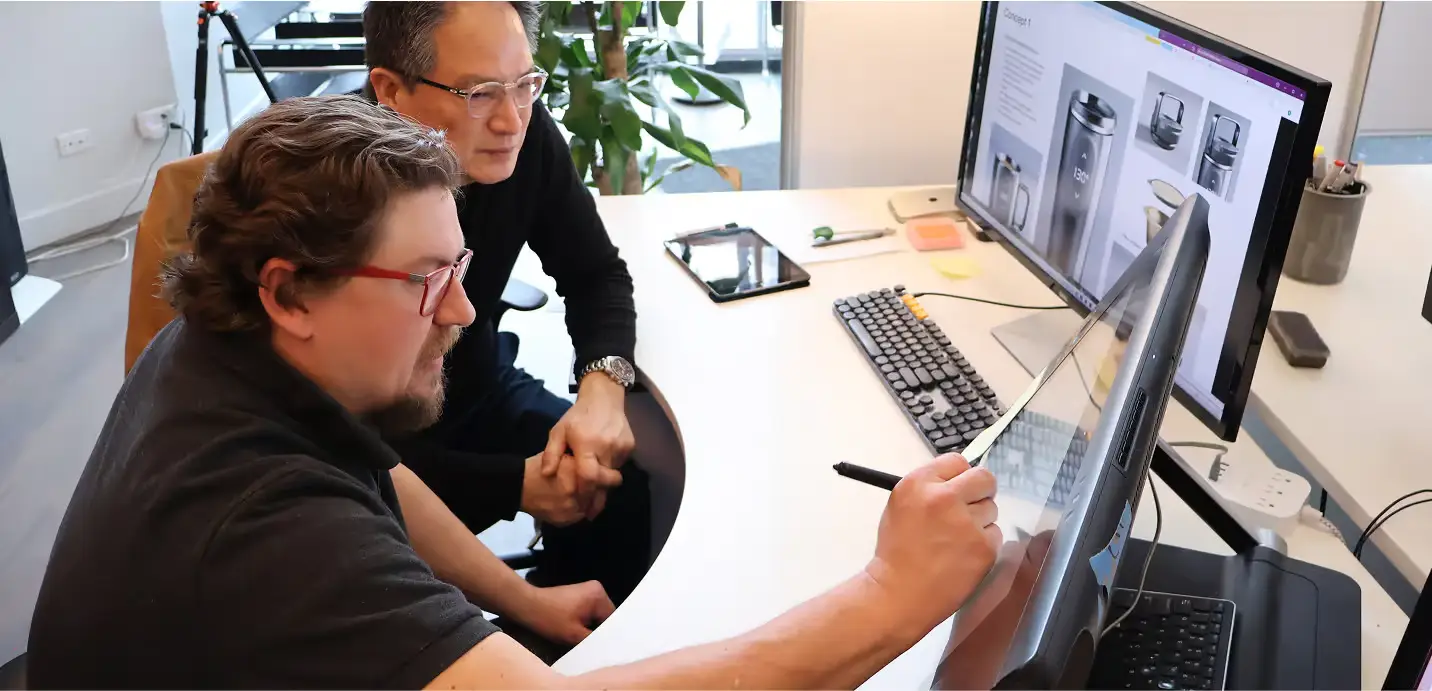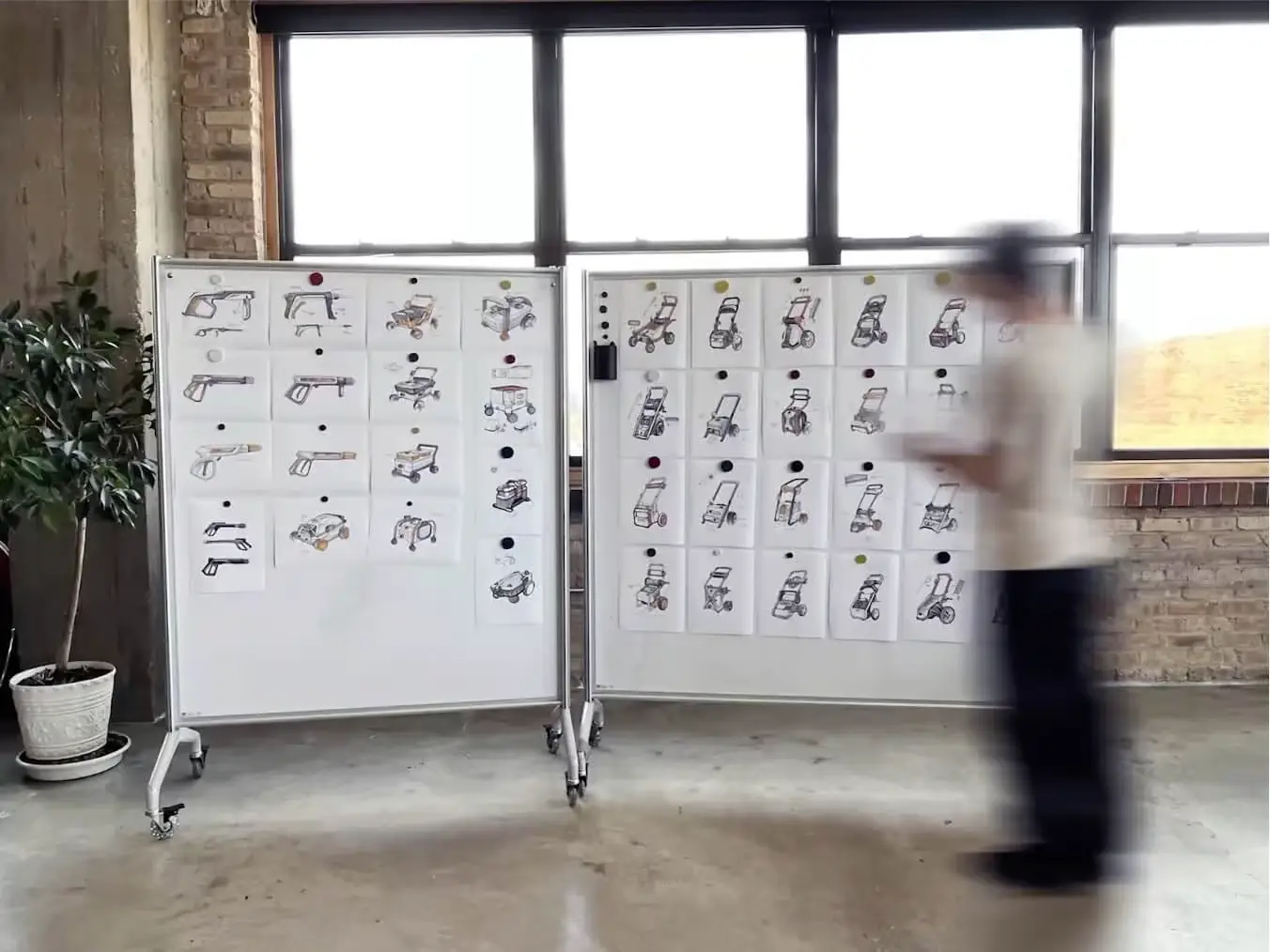
CHOI Design Group designers reviewing user research

User Research, Ergonomics & Human Factors

Watch what people do, not just what they say.

CHOI Design Group (CDG) treats user research, ergonomics and human factors as drivers of innovation, not a separate exercise. Our designers engage directly with users to understand their behaviors, unmet needs, physical interactions and environments.

Those insights become intuitive, ergonomic and differentiated products. Because we pair human-centered design with practical engineering and manufacturing knowledge, the improvements users ask for make it into the product that ships.

Research & human factors services

  1. User research & insights

    Interviews, observational studies and contextual research into behaviors, needs, preferences and pain points.

  2. Market & competitive research

    Evaluation of competing products, user expectations and trends to find openings for innovation.

  3. Ergonomic & human factors analysis

    Anthropometrics, physical interaction, comfort, reach, grip, accessibility, safety and user performance.

  4. Interaction design

    Intuitive interfaces, control layouts, workflow improvements and ease-of-use solutions.

  5. Concept evaluation & user testing

    Testing concepts, mockups and prototypes with representative users to measure usability and acceptance.

  6. Findings you can act on

    Research findings, competitive benchmarks, ergonomic studies, journey maps, usability summaries and validated design refinements.

When clients bring us in

Clients usually bring us in when they are developing a new product, redesigning an existing one, entering a new market or facing a usability problem. Common triggers include products that are difficult or uncomfortable to use, inefficient workflows, unmet customer needs, safety concerns, or a need to stand out from competitors.

What the research tends to uncover

  • Unrecognized needs. Customers adapt to product limitations without realizing better solutions are possible.
  • Actual vs. intended use. People often use products differently than designers expect, revealing room to improve function, safety and usability.
  • Hidden ergonomic challenges. Subtle issues with comfort, reach, grip, posture and repetitive movement can significantly affect satisfaction and performance.
  • Unexpected innovation. Small observations about behavior can inspire new features or entirely different design approaches.
  • Cost opportunities. Knowing what users truly value helps eliminate unnecessary features and focus investment where it matters.

CDG goes beyond gathering feedback. We translate research and human factors findings into industrial design and engineering decisions, balancing user needs with technical feasibility, manufacturing and business goals.


People adapt to bad products. We notice.

Customers often work around a product’s limitations without realizing a better solution is possible. Observation uncovers those needs.

Human-centered work

“If you are looking for someone who knows how to listen or just want a unique perspective on your initial concepts I would highly recommend”
Tim G Director of Engineering

We are an innovative Design,
Engineering and Visual identity agency,
with over 30 years of success in Chicago

Charles Choi founded CHOI Design Group in 1994 with a vision to fuse design innovation with strategic business growth. Today our team of designers, engineers and researchers has completed more than 2,000 projects and earned 256 patents, working with brands such as Weber, Cardinal Health, Midmark and Flexco.

About us

Common questions

What is human factors in product design?

Human factors is the study of how people physically and mentally interact with products: their size and strength, reach and grip, perception, habits and the errors they’re likely to make. Applying it makes products more comfortable, intuitive and safe.

What do clients learn from user research?

Often, that people use the product differently than intended. Research also exposes hidden ergonomic issues around comfort, reach, grip, posture and repetitive motion, and shows which features users value. That last point helps cut unnecessary features and cost.

Do ergonomics affect sales?

Yes. Ease of use, tactile quality, intuitive interaction and comfort often influence purchasing decisions as much as technical performance or appearance.

How does CDG use AI in research?

AI tools help synthesize research and identify patterns, which gives our designers more room to explore and refine human-centered solutions. Direct observation and designer judgment remain at the core.

Let’s Work Together

Tell us about the product you want to build. We’ll bring 30 years of design, engineering and manufacturing experience to it.
Get started