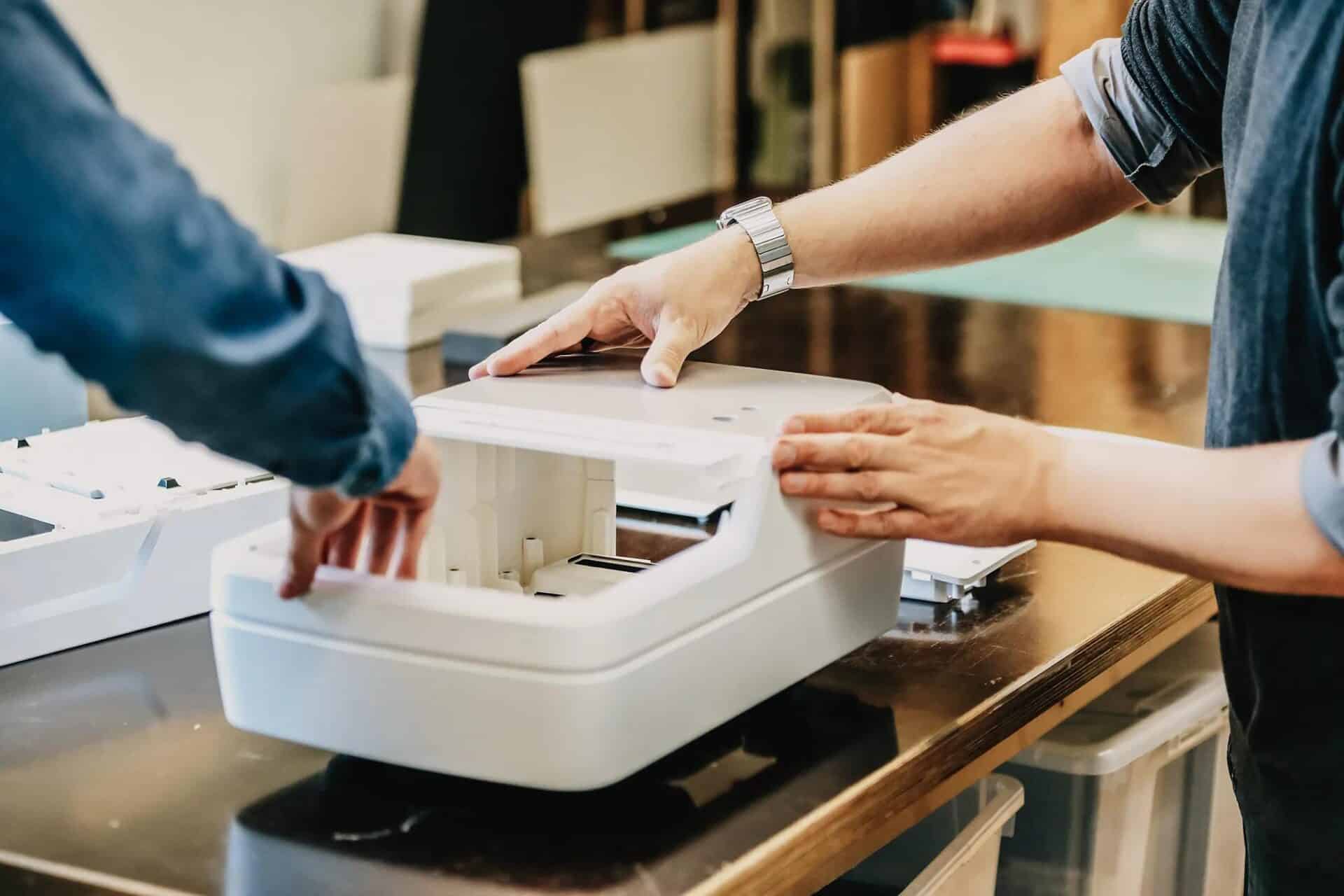
Artificial intelligence is changing how product teams research markets, explore concepts, and communicate design directions. For companies developing physical products, these tools create opportunities to explore ideas more efficiently and make better-informed decisions throughout the development process.
At CHOI Design Group (CDG), the opportunity lies in combining emerging technologies with decades of hands-on experience in industrial design, engineering, manufacturing, and product development. AI can help expand the range of possibilities, but transforming an early concept into a successful product requires a deeper understanding of users, technical requirements, production realities, and business objectives.
The distinction matters because generating a compelling concept is only one part of product development. The real challenge is determining which ideas are worth pursuing and translating them into products that work in the real world.
AI Expands the Possibilities of Industrial Design
Industrial design begins with understanding a problem and exploring ways to solve it. AI-assisted tools can support this process by helping teams visualize alternatives, investigate different design directions, and communicate ideas during early development.
These capabilities can help teams explore possibilities before committing significant time and resources to a particular direction. They can also support discussions among designers, engineers, product managers, and other stakeholders.
However, more concepts do not automatically lead to better products. Each direction still needs to be evaluated against the intended user’s needs, the product’s purpose, manufacturing constraints, and the company’s commercial objectives.
That is where experienced designers make a difference. They help determine which ideas offer meaningful value, which introduce unnecessary complexity, and which deserve further development.
At CDG, the opportunity is not simply to generate more design options. It is to use new tools alongside established design and engineering expertise to make the exploration and decision-making process more productive.
From Initial Concepts to a Market-Ready Product: The NuWave Smart Mug
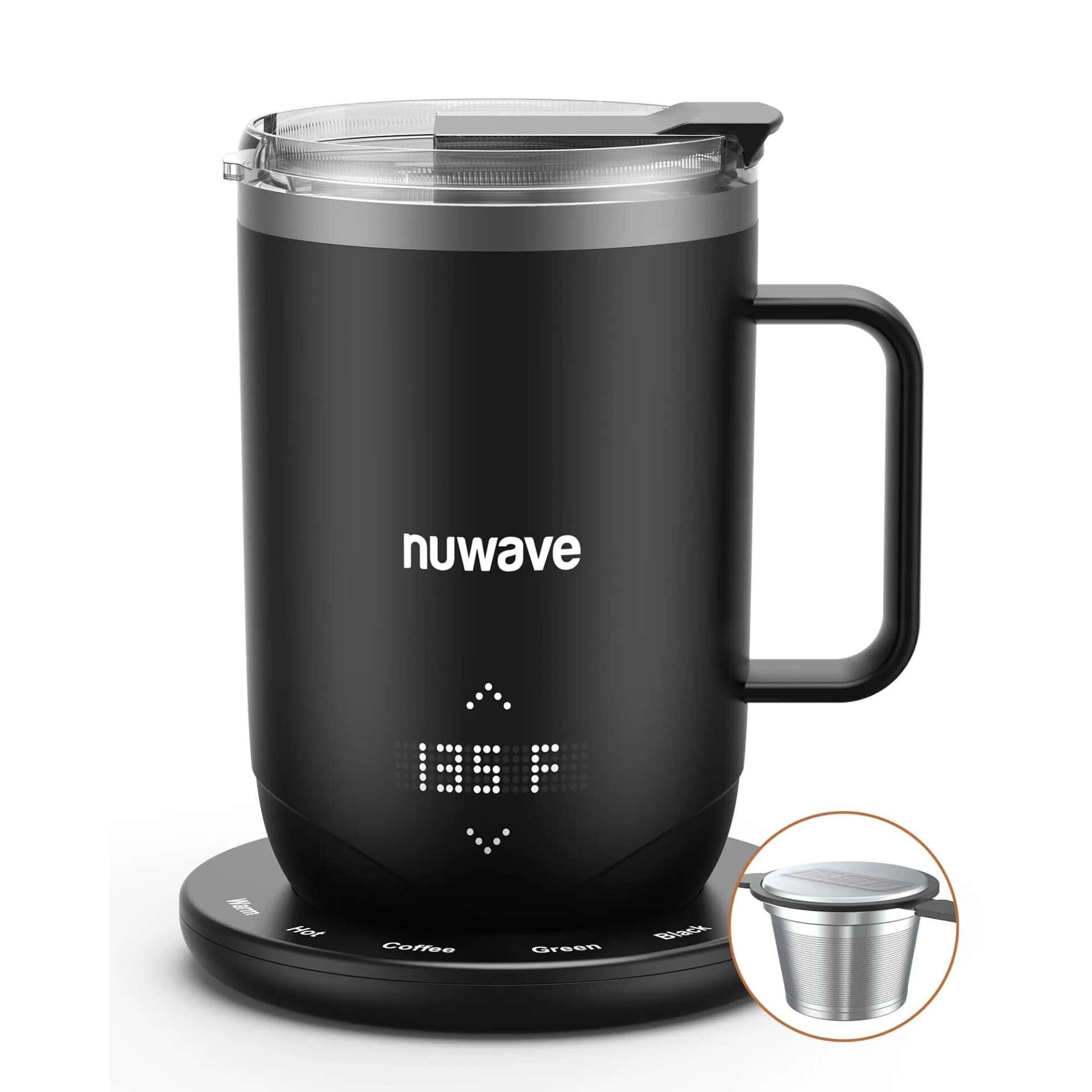
NuWave Smart Mug: product imagery and initial design concept explorations supplied for this article.
A useful example of CDG’s product development capabilities is its work with NuWave on the Smart Mug. The project illustrates the journey from exploring initial design directions to a finished consumer product introduced to the market in 2026.
The concept imagery shows different considerations involved in developing the product, including its overall form, temperature display, control interface, lid, handle, and associated components. These elements need to work together as part of a coherent product experience rather than as isolated styling decisions.
For example, the placement and shape of controls influence how users interact with the mug. The display needs to communicate temperature clearly, while the handle, lid, and overall proportions contribute to how the product is held and used. The visual relationship between these elements also helps establish the product’s identity.
Moving from early concepts to a finished product requires evaluating these considerations together. A design direction must do more than look appealing in a presentation; it must also support the product’s intended function and practical requirements.
The NuWave example demonstrates why product development benefits from an integrated approach to industrial design and engineering. Visual decisions, usability, component integration, and manufacturing considerations all influence the final result.
For CDG, the broader lesson is relevant as AI becomes more capable of supporting early design exploration. Tools can help teams communicate and compare possibilities, but the value comes from applying sound judgment to those possibilities and developing a solution that can succeed beyond the concept stage.
Good Industrial Design Connects User Needs With Technical Requirements
A product can look distinctive and still fall short if it does not work well for its intended users. Industrial design requires balancing appearance, usability, ergonomics, functionality, and technical feasibility.
Consider a handheld electronic product. Its form may look elegant in a rendering, but the design still needs to account for grip comfort, button placement, visibility, weight distribution, and ease of operation. The internal components must also fit within the product’s physical constraints.
These decisions are interconnected. Changing the shape of a housing may affect component placement. Moving a control may improve accessibility but introduce engineering challenges. Adding a feature may improve functionality while increasing complexity or cost.
AI-assisted concept exploration can help teams consider different approaches, but those options need to be assessed against the product’s real requirements.
CDG’s experience across industrial design, engineering integration, prototyping, and manufacturing helps connect these disciplines. The objective is to develop products in which the visual design, user experience, and technical solution support one another.
Designing for Manufacturing, Cost, and Long-Term Use
Manufacturing considerations should influence product development early rather than being addressed only after a design has been finalized.
Materials, component count, assembly methods, tolerances, and production processes can all affect the feasibility and cost of a product. A design that appears simple on screen may require complicated tooling or difficult assembly. Conversely, thoughtful design decisions can simplify construction without compromising the intended product experience.
AI may support early exploration of alternative forms and configurations, but determining whether a design is practical to manufacture requires engineering knowledge and an understanding of production constraints.
Addressing these considerations early can help teams identify potential issues before they become expensive to correct. It can also support more informed trade-offs between appearance, performance, production cost, and product quality.
For clients, the benefit is a more considered development process. Rather than treating styling, engineering, and manufacturing as separate stages, an integrated approach helps teams understand how decisions in one area affect the others.
Prototyping Turns Design Decisions Into Evidence
Digital models and visual concepts are valuable tools for communicating ideas. However, they cannot answer every question about a physical product.
Depending on the product and stage of development, prototypes can help teams assess proportions, handling, component relationships, controls, and user interaction. Further testing may be required to evaluate technical performance or confirm that a product meets defined requirements.
A control that looks well positioned in a rendering may be awkward to operate. A housing may need adjustment to accommodate internal components. A proposed assembly approach may prove impractical once the parts are evaluated together.
Physical evaluation gives teams an opportunity to identify these issues and refine the design before proceeding further.
AI can contribute to early exploration and communication, but it does not replace appropriate prototyping, engineering evaluation, or product testing. Combining digital tools with practical evaluation helps teams move from promising ideas toward solutions that are better understood and more thoroughly developed.
Applying AI With Experience and Judgment
AI is becoming another tool available to industrial design teams. Its value depends on how it is integrated into the development process and how its output is evaluated.
Potential applications include:
- Concept exploration: Investigating alternative design directions and communicating early ideas.
- Research support: Organizing information and helping teams identify questions that need further investigation.
- Design communication: Making it easier to discuss and compare potential approaches with stakeholders.
- Development efficiency: Supporting selected tasks so teams can focus more attention on important design and engineering decisions.
These applications should support, rather than replace, the professional judgment required to develop physical products. Generated concepts and research summaries need to be reviewed for accuracy, feasibility, and relevance to the project.
The same applies to business decisions. A concept may look innovative but offer little meaningful differentiation. Another may introduce unnecessary features or manufacturing complexity. Experienced designers help teams evaluate such trade-offs and focus resources on ideas that address genuine user and business needs.
For companies developing new products, the objective is not to adopt AI for its own sake. It is to identify where new capabilities can improve the development process while maintaining the rigor required to bring products to market.
Turning Design Possibilities Into Business Results
As AI tools become more widely available, access to the technology alone is unlikely to be a lasting competitive advantage. The greater opportunity lies in applying these tools effectively within a disciplined product development process.
For businesses, that means looking beyond the number of concepts generated and considering the quality of the decisions that follow. Can a concept be developed within the project’s constraints? Does it address an identifiable customer need? Can it be manufactured efficiently? Will it offer a meaningful point of differentiation?
Answering these questions requires collaboration across design, engineering, and manufacturing, supported by an understanding of the client’s commercial goals.
An integrated approach can help teams explore opportunities more efficiently, identify potential problems earlier, and make more informed development decisions. Depending on the project, these improvements may contribute to lower development costs, reduced risk, stronger product differentiation, and better commercial outcomes.
AI creates new possibilities for industrial design, but experience remains essential to determining how those possibilities translate into real products.
AI is changing the speed and scope of industrial design, but the true competitive advantage is not how many concepts a company can generate. It is how effectively those concepts can be transformed into successful products. At CHOI Design Group, we believe the future of industrial design lies in combining emerging AI capabilities with decades of hands-on experience in design strategy, ergonomics, engineering integration, prototyping, and manufacturing. Our value is not simply in creating more design possibilities. It is in helping clients identify the right opportunities, make informed development decisions, avoid costly mistakes, and create differentiated products that deliver meaningful business results.
To discuss a product development challenge with CHOI Design Group, contact our team.